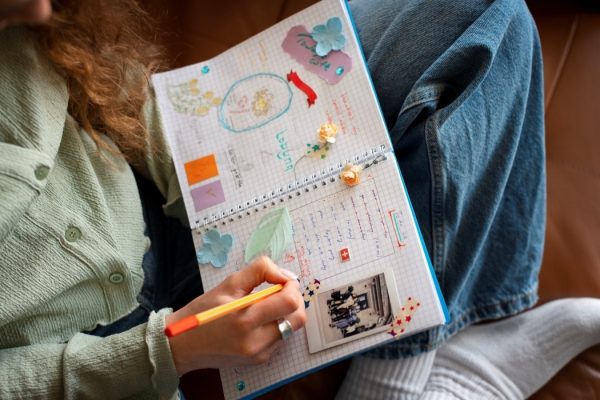
Post-breakup journaling is a practice that helps you process your emotions, gather your thoughts, and come to terms with a major life change.
When you experience a breakup, your mind is often filled with a high volume of conflicting thoughts. You might feel a mix of sadness, anger, and confusion all at the same time. Writing these thoughts down on paper moves them from your mind to an external space. This process allows you to look at your feelings with more objectivity.
Journaling also helps you track your progress over time. In the first few days, your entries might be short or highly emotional. As weeks pass, you will likely notice that your writing becomes more focused on your daily life and your personal goals. This visual record serves as evidence that you are healing, even on days when you feel like you are not making progress.
In this article, you will learn how to use a journal to manage all these difficult feelings that are constantly overcoming you. We will cover specific methods for finding closure on your own, prompts that encourage you to look at your situation from new perspectives, and a guide for planning a future that focuses on rebuilding your life.
Post-Breakup Recovery Journal: Step-By-Step Guide
Step 1: Acknowledging Emotions
It is common to try to suppress difficult emotions because they are uncomfortable. However, acknowledging your emotions is a necessary part of the healing process. When you name a feeling, it often becomes less overwhelming. Your journal is a safe place to admit exactly how you feel without anyone judging you or telling you to cheer up.
Naming Your Feelings
Start by identifying the specific emotions you feel throughout the day. You might feel lonely in the morning, frustrated in the afternoon, and sad in the evening. All of these feelings need to be felt and validated; they all serve a purpose in the healing process. In your journal, try to be as specific as possible. Instead of just writing that you feel “bad,” try to determine if you feel rejected, exhausted, and perhaps even a little bit relieved.
Noticing Physical Responses
Emotions often show up in your body. You might notice a tightness in your chest or a lack of appetite. Write about these physical sensations. This helps you connect your mind and your body, which can make the recovery process feel more grounded and manageable.
Journal Prompts for Emotional Awareness:
- How are you feeling right now?
- What is the strongest emotion you felt today, and which thoughts came with it?
- Write about three moments when you felt heavy today.
- Write about emotions you are tired of feeling.
- Write about one emotion you’re avoiding to feel.
- Write about ways you’re coping with uncomfortable emotions.
- Describe a time today when you felt a positive emotion, even if it only lasted for a minute.
Step 2: Reflecting on the Relationship
Reflecting on the relationship involves looking at the past with a focus on facts and patterns. This is different from ruminating, which is when you replay the same sad thoughts over and over. Productive reflection helps you understand why the relationship functioned the way it did and why it eventually ended.
Assessing Your Needs
Every person has specific needs in a relationship, such as communication, quality time, or emotional support. Use your journal to evaluate how well those needs were met. Be honest about the times you felt satisfied and the times you felt neglected. This isn’t about blaming the other person; it is about understanding your own needs for a healthy connection, and realizing whether the ex-partner was able to meet those needs.
Identifying Patterns
Often, relationships have recurring issues. You might notice that you and your former partner had the same disagreement many times without finding a resolution. Writing about these patterns helps you see that the breakup was likely the result of long-standing issues due to differences rather than a single mistake or somebody’s fault. This perspective makes it easier to accept that the end of the relationship was a logical outcome.
Journal Prompts for Relationship Reflection:
- List some things you consistently liked about the relationship.
- List some things that were consistently difficult or stressful for you.
- Describe a situation where you felt you could not be your true self.
- What were the most common topics you argued about, and were they ever truly resolved?
- How did your daily life change from the beginning of the relationship to the end?
- What are the three most important lessons you learned about yourself during this time?
- What red flags did you ignore?
- What did you lose of yourself in that relationship?
Step 3: Acceptance and Healing
Healing requires you to process your emotions rather than pushing them away. These prompts are designed to help you look at the breakup from different angles so you can start to accept your new reality.
Understanding Your Emotions
- List three physical sensations you feel in your body right now and name the emotion associated with each one.
- Describe the most difficult part of the day and explain why that specific time is hard for you.
- Write down five things you feel angry about regarding the breakup or relationship.
- Identify one thing you feel guilty about and write a paragraph explaining why you deserve to forgive yourself for it.
- Describe a moment today when you felt a brief sense of peace or distraction.
Reframing the Narrative
- What are three things you can do now that you could not do when you were in the relationship?
- Write about a personal strength you have used to get through this week.
- List the qualities you have as a partner that you are proud of.
- What did this relationship teach you about what you require in a future partner?
- Describe a boundary you wish you had set earlier and how you will set it in the future.
Rediscovering Yourself
- After a breakup, your identity might feel linked to the person you were with. Journaling is an excellent way to rediscover who you are as an individual. When you spend time writing about your own interests, opinions, and values, you begin to rebuild your sense of self.
- What were your favorite hobbies before you started the relationship? Describe how you can restart one of them this week.
- List five words that describe your personality today, independent of any relationship status.
- Write about a topic you are interested in that your former partner did not enjoy.
- If you could travel anywhere alone, where would you go and what would you do?
- Describe your ideal daily routine if you only had to consider your own preferences.
Step 4: Finding Closure
Closure is often misunderstood as something you need to get from another person. In reality, closure is a decision you make to accept the situation as it is. You don’t need a final conversation with a former partner to decide that the relationship is over and that you are ready to move on.
The Relationship Timeline
Sometimes, memory can be selective after a breakup. You might only remember the positive moments and forget all the problems you ignored throughout the relationship. Creating a factual timeline of the relationship helps you see the full picture.
Write down the major events from the beginning to the end. Include the disagreements, the moments where you felt ignored, and the times when your needs were not met. Seeing these events written in chronological order helps you understand the logic behind the breakup. It shifts the focus from what went wrong to how the relationship progressed to its natural conclusion.
The Unsent Letter
One of the most effective ways to find closure is to write a letter to your former partner that you will never send. This allows you to say every single thing you are thinking without worrying about how the other person will react. You can be completely honest about your hurt, your frustrations, and the things you will miss.
When you write this letter, don’t hold back. State the facts of how you were treated and how those actions made you feel. Once you finish writing, you can keep the letter in your journal as a record of your truth, or you can destroy it. The act of writing it is what provides the relief.
Step 5: Planning The Future
The final stage of using a journal for recovery involves looking forward. This part of the process is about taking control of your life and deciding what you want your future to look like. It is helpful to start with small, manageable goals and slowly work toward larger life changes.
Immediate Logistics
Write a list of the practical things that have changed because of the breakup. This might include living arrangements, shared bills, or social circles. Create a step-by-step plan for how you will handle each of these items. Having a clear plan reduces the anxiety of the unknown.
Short-Term Personal Goals
Focus on the next thirty days. What do you want to achieve for yourself? This could be related to your health, your career, or your home environment. Write down three goals and the specific actions you will take to reach them.
Long-Term Vision
Imagine your life one year from today. Don’t include a partner in this vision. Focus on where you are living, the work you are doing, and the people you are spending time with. Write a detailed description of this future version of yourself.
Future-Focused Journal Prompts
How do you want to spend your weekends now that your time is entirely your own?
What is one new skill you want to learn this year?
Write a list of ten places in your local area you want to visit on your own.
Describe the type of environment you want to create in your living space.
What does success look like to you in this new chapter of your life?
Final Thoughts on Healing
Recovery from a breakup is a slow process, and it is normal for your emotions to fluctuate. Some days you will feel optimistic about the future, and other days you might feel the loss more deeply. A journal is a steady companion that can handle all of these versions of you.
By writing down your thoughts, you are taking an active role in your own healing. You are choosing to face your feelings, learn from your experiences, and build a foundation for a future that belongs entirely to you.