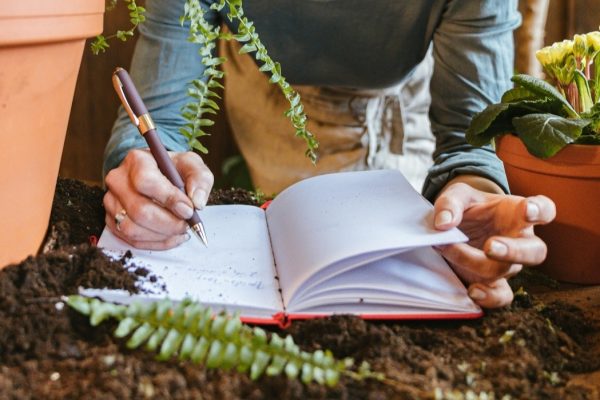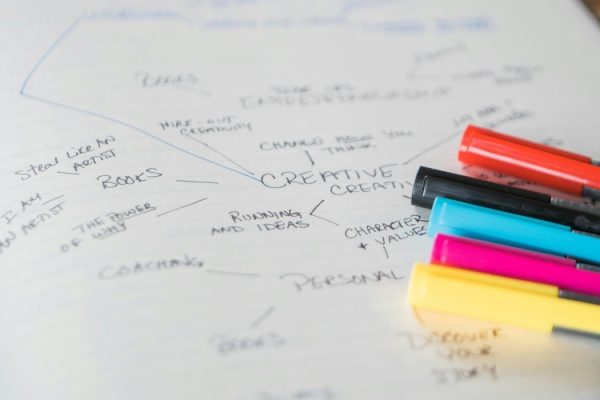
Through practicing the GLAD journaling method, you are training your mind to pay attention to good things around you. When you constantly think about your worries, problems, and things that annoy you, your brain gets very good at finding more of such things. But if you practice noticing the good in life, your brain also gets better at finding more of the good around you.
This is not about lying to yourself or pretending bad things don’t happen. It is about creating balance in your thinking.
GLAD journaling technique is a type of mindfulness practice where you focus on four distinct positive experiences from the day. When you sit down to write, you will, in your mind, go through the day and write about something you’re Grateful for, something you Learned, something you Accomplished and something you Delighted in.
GLAD Journaling Technique
G is for Gratitude
Gratitude is about finding one thing you are grateful to have in your life right now. This is not about big things. It’s about the basic things that keep you going. Think about a person who makes you feel safe, a physical object that serves a purpose, or a basic comfort that you often take for granted. When you write down things you appreciate, you stop focusing on what you lack, and you start to see that you already have many things that make your life good.
Gratitude physically changes the way your brain handles stress. When you focus on what you have, you stop your brain from scanning for what is missing. This lowers your levels of cortisol (the stress hormone), which makes you feel anxious. By writing down your gratitude, you are moving your focus from a state of not enough to a state of plenty. This creates a feeling of security. It tells your nervous system that you are safe and supported, which allows your body to relax.
Think of one thing you are grateful to have in your life.
L is for Learning
Living a full life requires growth. When you learn something new, your brain stays active and engaged. This doesn’t have to be a complex academic subject. It’s simply about noticing a new piece of information or a new insight you gained during the day. This can be a fact about the world, a realization about your own behavior, or a new way to solve a problem. Learning something new every day gives you a sense of progress. It reminds you that you are changing and improving as a person.
When you record something you learned, you are encouraging your brain to stay flexible and curious. People who focus on learning are generally less afraid of change. If you view every day as a chance to gather information, you stop seeing mistakes as failures. Instead, you see them as learning opportunities. This reduces the fear of doing things wrong and keeps your mind active and young.
Think of one thing you discovered or realized today.
A is for Accomplishment
We often finish the day and feel like we did nothing. This is usually because we only count the big wins as accomplishments. Here, it’s very important to keep things simple. An accomplishment is any task that you started and finished, or any positive choice you made for yourself. It can be a work task, a house chore, or even an act of self-care like going to bed on time. This builds your self-confidence. It proves to you that you are capable of taking action and finishing what you start.
The brain runs on dopamine. You get a hit of dopamine when you acknowledge a finished task. Most people ignore their small wins and only wait for big wins. This leaves them feeling tired and unmotivated. When you write down small accomplishments every day, you give yourself a regular dose of dopamine. This makes your brain motivated to engage in similar tasks in the future.
Think of one thing you did today, even if it was a small chore.
D is for Delight
Delight is the small, sensory joy that makes you think “life is worth living”. These are moments that make you smile or feel a sense of awe. Delight is different from gratitude because it is unexpected and it’s a pure emotion. It’s a moment where you feel a sudden positive emotion because of something you saw, heard, tasted, or felt.
Delight brings you to the present moment and forces you to pay attention to your surroundings. Most of our unhappiness comes from worrying about the future or regretting the past. Delight cannot happen in the past or the future; it only happens now. When you record these moments, you are training your brain to notice beauty even when you are busy or stressed, which significantly improves your mood.
Think of one thing that made you smile or feel a tiny bit of joy.
How to Handle Difficult Days
There will be days when everything goes wrong. On these days, the GLAD practice is more important than ever, but it is also much harder to do. If you are having a terrible day, don’t try to force yourself to feel happy or falsely optimistic.
Instead, look for the smallest possible versions of GLAD. For gratitude, you might just be grateful that the day is almost over. For learning, you might have learned that you need more rest than you thought. For accomplishment, you made it through a really hard day. For delight, maybe you enjoyed the taste of your morning coffee.
The brain does not care if the joy is big or small. It only cares that you are looking for it. By doing this on your worst days, you are proving to yourself that you have control over your perspective. This is how true happiness is built. It is not the absence of problems; it is the ability to find value even when things are difficult.
Benefits of GLAD Journaling
Writing in this way changes the chemistry of your body. When you focus on positive things, your brain releases dopamine and serotonin, making you feel relaxed and happy. Daily practice will have a positive effect on several key areas:
Better sleep: When you write your GLADs before bed, you stop your brain from worrying about the next day. This helps your body relax so you can fall asleep faster.
Lower stress: Actively looking for accomplishments reduces the feeling of being overwhelmed. You start to see that you are handling your life well, and it gives you confidence to keep going.
Improved memory: By writing down what you learned and what delighted you, you are telling your brain that these memories are important. This helps you remember your life with more detail and color.
Emotional resilience: When something bad happens, a person who practices GLAD journaling has a stronger mental base. You know that good things still exist, even during a hard week.
The GLAD journaling method turns your journal into a tool for transformation. You are not just writing down what happened; you are choosing how to remember it. Over time, this practice will become automatic. You will start to notice things you are grateful for or things that delight you while they are happening, rather than just when you sit down to write. This is how you rewire your brain. You move from a state of reacting to the world to a state of actively finding the good within it.